

































































































































































The Best 7 Health Benefits of Exercise
Author: RVLNSV PRASAD
Updated On: August 2026

Author Note
This article was written by RVLNSV PRASAD to provide practical, easy-to-understand information about the potential benefits of regular physical activity. It combines general health guidance with personal observations and examples. Personal experiences are included for context and should not be considered scientific evidence or a guarantee of individual results.
Introduction
The 7 Health Benefits Of Exercise can support your physical and mental well-being in simple and practical ways. Exercise is not only for athletes or people who enjoy going to the gym. It can be useful for young people, older adults, busy workers, students, and parents.
Your body needs regular movement, but modern life often involves sitting for many hours at work, in cars, or while using phones and other devices. Long periods of inactivity can affect overall health, which is why adding regular physical activity to your routine matters. The CDC explains the health benefits of physical activity, including benefits for heart health, brain health, muscles, bones, and sleep.
I learned the importance of regular movement through my own experience. A few years ago, I worked long hours on a computer and rarely moved enough during the day. My back often hurt, my energy was low, and I felt tired even after sleeping.
One small habit changed my routine. I started moving every day through activities such as walking, stretching, and simple bodyweight exercises. Within a few weeks, I felt lighter, my mind seemed clearer, and my sleep improved. This was my personal experience, not scientific evidence, and individual results can vary.
Regular physical activity can support:
- Heart health
- Muscle strength
- Mental well-being
- Better sleep
- Healthy weight management
- Mobility and physical function
The National Library of Medicine’s MedlinePlus also provides evidence-based information about the benefits of regular exercise. This guide explores important exercise benefits for overall health, explains why movement matters, and offers practical ways to build a healthy habit that can last over time.
Why Exercise Is Important for Human Health
Before exploring the benefits of regular exercise, it is important to understand why movement matters. Regular physical activity supports overall health, while modern lifestyles can involve long periods of sitting at work, in cars, or while using digital devices. The CDC explains the health benefits of physical activity, including benefits for the heart, muscles, bones, sleep, and mental well-being.
Regular movement can help:
- Support heart health
- Strengthen muscles and bones
- Improve sleep
- Reduce anxiety
- Support healthy weight management
- Improve balance and physical function
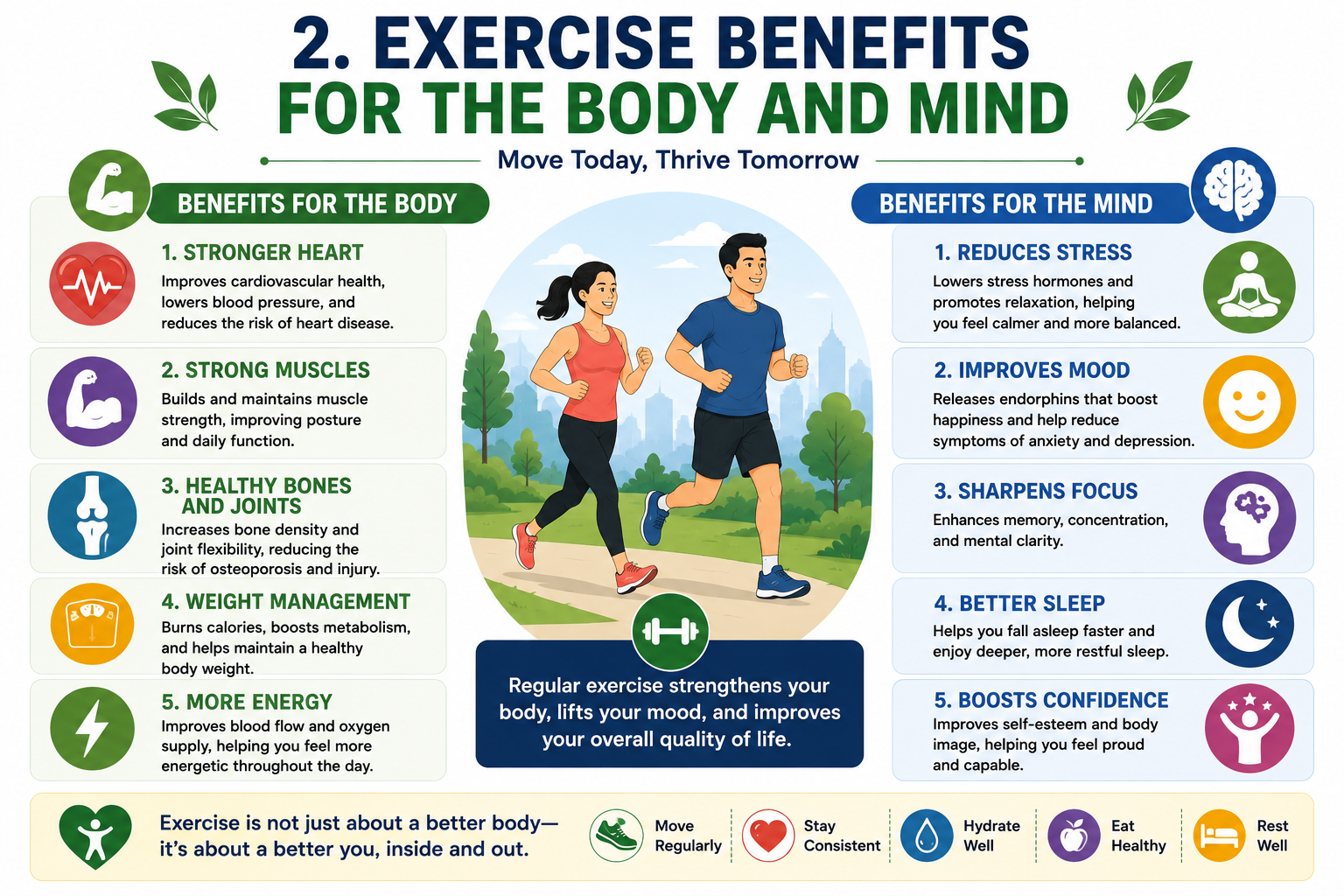
You do not need extreme workouts to become more active. The CDC recommends at least 150 minutes of moderate-intensity aerobic activity per week for adults, plus muscle-strengthening activities on at least two days.
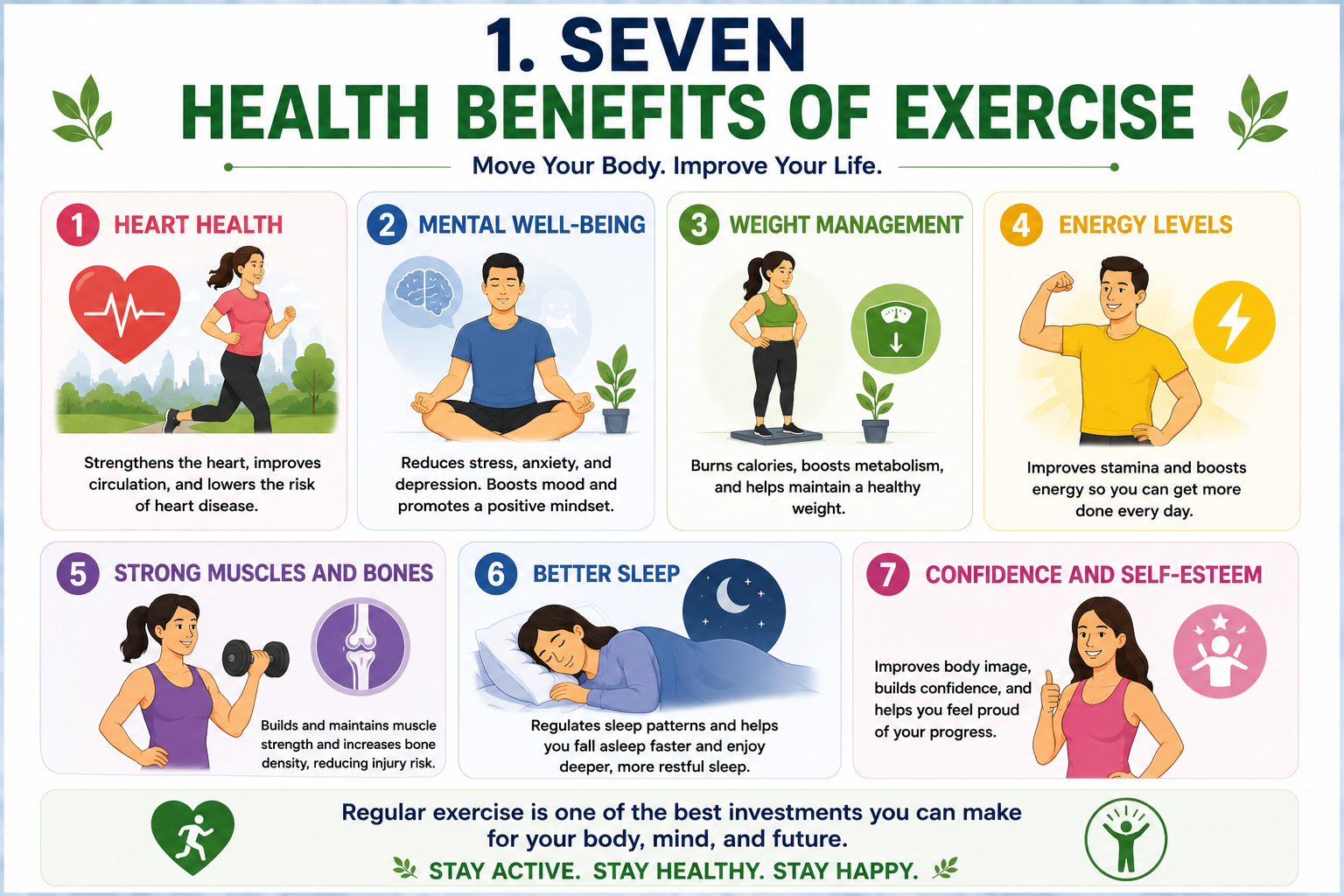
Now, let us explore the seven key benefits of exercise in more detail.
1. Exercise and Heart Health
Regular physical activity can support cardiovascular health by helping the heart and circulatory system work more efficiently. It may also help manage blood pressure and reduce the risk of heart disease. The NHS explains the heart-health benefits of regular exercise, while CDC guidelines note that physical activity can help lower blood pressure.
Real-Life Example
My uncle was diagnosed with high blood pressure, and his doctor suggested adding a 30-minute daily walk to his routine. He followed the advice for several months and reported improvements in his blood pressure, weight, and energy. His experience shows how a simple activity such as walking can become part of a healthier lifestyle, although individual results vary and personal experiences are not a substitute for medical evidence.
Regular activity can support heart health by helping to:
- Improve cardiovascular fitness
- Support healthy blood pressure
- Improve circulation
- Reduce cardiovascular risk
- Strengthen the heart and muscles
For people with existing heart conditions or other health concerns, exercise intensity should be appropriate to their circumstances and discussed with a healthcare professional when necessary
Expert Insight
Cardiologists often recommend moderate physical activity.
Activities like walking, cycling, or swimming support heart health.
Even 20 minutes of daily exercise can make a difference.
7 Health Benefits of Exercise at a Glance
| Benefit | How Exercise May Help |
|---|---|
| Heart health | Supports cardiovascular fitness and healthy blood pressure |
| Mental health | Can support mood and help reduce stress and anxiety |
| Weight management | Increases energy expenditure and supports healthy weight |
| Energy levels | Improves fitness and can make daily activities feel easier |
| Muscles and bones | Helps maintain muscle strength and supports bone health |
| Better sleep | Can support sleep quality and a healthy sleep routine |
| Confidence and self-esteem | Improving physical abilities can support confidence and well-being |
2. Exercise and Mental Health
Another important benefit of regular physical activity is its potential to support mental well-being. Exercise can help reduce stress and anxiety while supporting mood and overall emotional health. The CDC explains how physical activity can benefit mental health, including reducing short-term feelings of anxiety and supporting brain health.
Personal Experience
During a stressful period at work, I felt overwhelmed, my concentration declined, and my sleep became poor. I decided to introduce a simple 20-minute morning walk into my routine. After several days, I noticed that I felt calmer and more positive. This was my personal experience, and individual responses to exercise can vary.
Scientific Explanation
Physical activity can influence brain processes and may help improve mood and reduce symptoms of anxiety and depression. Rather than attributing these effects to a single chemical, it is more accurate to recognize that exercise affects several biological and psychological processes. This is why regular movement is often included as one component of a broader approach to stress management and mental well-being.
3. Exercise for Weight Management
Regular physical activity can support weight management by increasing energy expenditure and helping maintain muscle mass. Exercise works best as part of an overall healthy lifestyle that also includes balanced nutrition, adequate sleep, and other sustainable habits. The CDC explains how physical activity can support healthy weight.
Exercise can support weight management by:
- Increasing daily energy expenditure
- Supporting muscle strength and lean body mass
- Making it easier to maintain a healthy weight
- Complementing a balanced eating pattern
- Supporting long-term physical fitness
A Real-Life Example
A colleague struggled with weight gain for several years and tried several diets, but the weight returned. He eventually focused more on regular movement, including daily walking, weekend cycling, and simple strength training. Over one year, he lost 10 kilograms and maintained his weight afterward. This is a personal example rather than scientific evidence, and individual results can vary.
4. Exercise and Energy Levels
7. Exercise for Confidence and Self-Esteem
A Missing Angle Most Articles Ignore
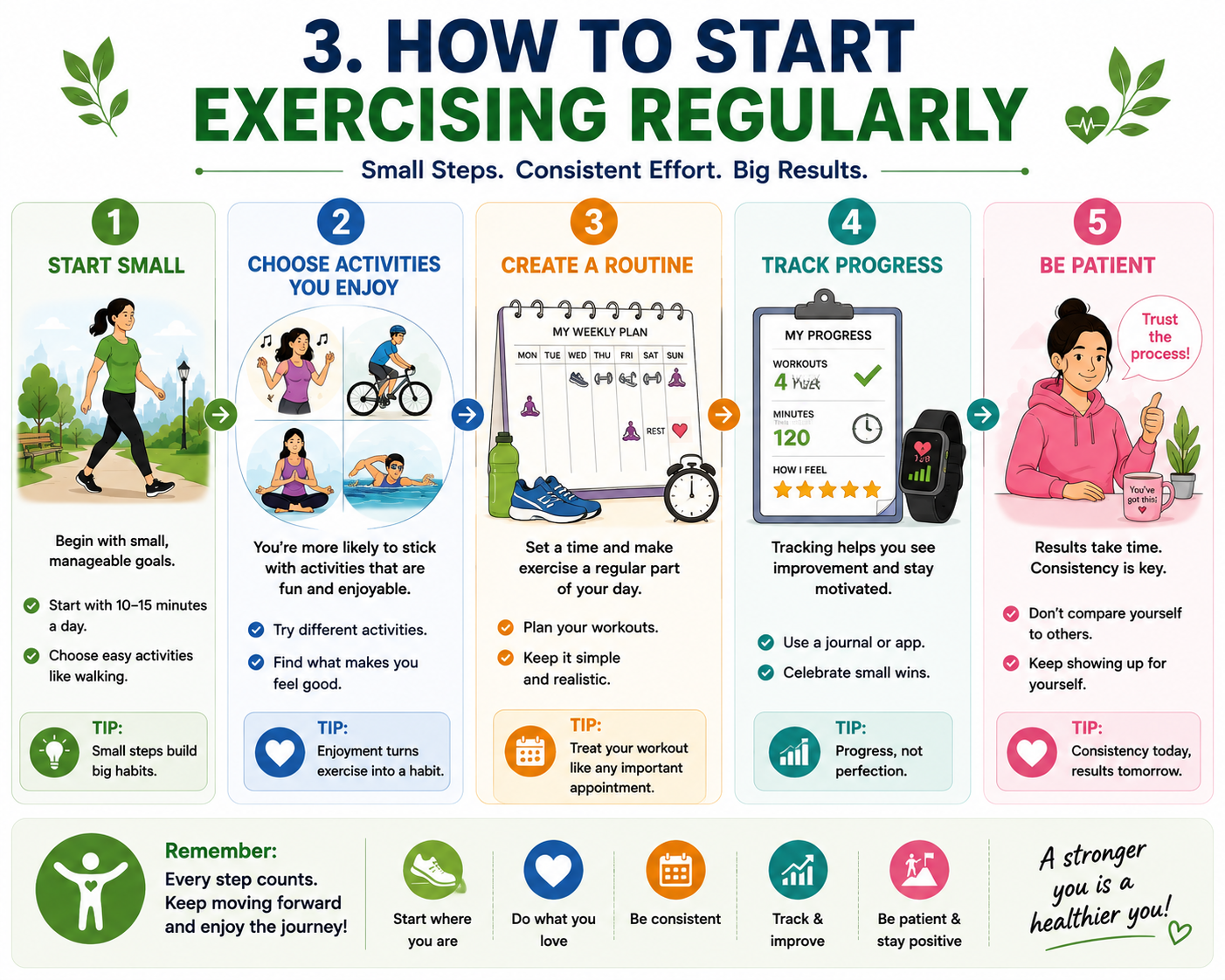
Many articles discuss the benefits of exercise, but they often overlook one of the most important factors: consistency. You do not need extreme workouts to become more active. Regular movement that fits your lifestyle is more realistic and easier to maintain over time.
A short session that you can repeat regularly may be more practical than an intense workout that you do only occasionally. The CDC recommends regular physical activity and notes that adults can gain health benefits by being active throughout the week.
Simple activities you can build into your routine include:
- Walking
- Stretching
- Light strength training
- Cycling
- Swimming
Long-term habits can help you maintain physical activity and support overall health. The goal is not perfection or maximum intensity; it is finding activities you enjoy and making them a regular part of your life. Small, consistent actions can make a meaningful difference over time.
Simple Weekly Exercise Plan for Beginners
| Day | Activity | Beginner Approach |
|---|---|---|
| Monday | Walking | 15–20 minutes |
| Tuesday | Strength training | Short beginner session |
| Wednesday | Walking or stretching | 15–30 minutes |
| Thursday | Rest or light movement | Recovery |
| Friday | Strength training | Short beginner session |
| Saturday | Cycling, swimming, or walking | Comfortable activity |
| Sunday | Rest or gentle stretching | Recovery |
Note:
This is only an example. Beginners should adjust the duration and intensity according to their fitness level, health status, and personal circumstances. Start gradually and increase activity over time.
My Honest Opinion About Modern Fitness Culture
Modern fitness culture often places too much emphasis on appearance, including perfect abs, specific body shapes, and social media transformations. However, overall health and fitness involve much more than how someone looks.
True well-being can include:
- Better energy
- Physical mobility
- Mental well-being
- Strength and endurance
- Long-term health
The real benefits of physical activity are about helping you live well, not simply changing your appearance. Exercise should support your daily life rather than become an overwhelming obligation. Choosing simple activities that you enjoy can make it easier to stay active consistently over time.
Conclusion
7 Health Benefits Of Exercise can support your heart, mind, muscles, sleep, energy levels, and overall quality of life. Regular physical activity can help manage weight, improve mood, strengthen muscles and bones, and support better sleep.
The key is not to follow complicated or extreme routines. Choose activities that suit your fitness level and lifestyle, then build your routine gradually.
Remember:
- Start small.
- Move regularly.
- Choose activities you enjoy.
- Stay consistent.
- Give your body time to adapt.
Over time, consistent physical activity can contribute to better health, greater physical function, and improved well-being.
Medical Disclaimer
This article is for general educational and informational purposes only. It is not a substitute for personalized medical advice, diagnosis, treatment, or exercise prescription. If you have a medical condition, injury, persistent pain, or concerns about starting a new exercise routine, consult a qualified healthcare professional before increasing your activity. Stop exercising and seek medical attention if you experience concerning symptoms such as chest pain, fainting, or severe shortness of breath.
Sources
- Mayo Clinic — Exercise: 7 Benefits of Regular Physical Activity
- CDC — Health Benefits of Physical Activity for Adults
- World Health Organization — Physical Activity
- WHO — Guidelines on Physical Activity and Sedentary Behaviour
- MedlinePlus — Benefits of Exercise
You Also Like These Articles









[…] Best 7 Health Benefits Of Exercise […]
[…] Best 7 Health Benefits Of Exercise […]
[…] Best 7 Health Benefits Of Exercise […]
[…] Best 7 Health Benefits Of Exercise […]
[…] Best 7 Health Benefits Of Exercise […]
[…] Best 7 Health Benefits Of Exercise […]
[…] Best 7 Health Benefits Of Exercise […]
[…] Best 7 Health Benefits Of Exercise […]
[…] Best 7 Health Benefits Of Exercise […]
[…] Best 7 Health Benefits Of Exercise […]
[…] Best 7 Health Benefits Of Exercise […]
[…] Best 7 Health Benefits Of Exercise […]
[…] Best 7 Health Benefits Of Exercise […]
[…] Best 7 Health Benefits Of Exercise […]
[…] Best 7 Health Benefits Of Exercise […]
[…] Best 7 Health Benefits Of Exercise […]
[…] Best 7 Health Benefits Of Exercise […]
[…] Best 7 Health Benefits Of Exercise […]
[…] Best 7 Health Benefits Of Exercise […]
[…] Best 7 Health Benefits Of Exercise […]
[…] Best 7 Health Benefits Of Exercise […]
[…] Best 7 Health Benefits Of Exercise […]
[…] Best 7 Health Benefits Of Exercise […]
[…] Best 7 Health Benefits Of Exercise […]
[…] Best 7 Health Benefits Of Exercise […]
[…] Best 7 Health Benefits Of Exercise […]
[…] Best 7 Health Benefits Of Exercise […]
[…] Best 7 Health Benefits Of Exercise […]
[…] Best 7 Health Benefits Of Exercise […]
[…] Best 7 Health Benefits Of Exercise […]
[…] Best 7 Health Benefits Of Exercise […]
[…] Best 7 Health Benefits Of Exercise […]
[…] Best 7 Health Benefits Of Exercise […]
[…] Best 7 Health Benefits Of Exercise […]
[…] Best 7 Health Benefits Of Exercise […]
[…] Best 7 Health Benefits Of Exercise […]
[…] Best 7 Health Benefits Of Exercise […]
[…] Best 7 Health Benefits Of Exercise […]
[…] Best 7 Health Benefits Of Exercise […]
[…] Best 7 Health Benefits Of Exercise […]
[…] Best 7 Health Benefits Of Exercise […]
[…] Best 7 Health Benefits Of Exercise […]
[…] Best 7 Health Benefits Of Exercise […]
[…] Best 7 Health Benefits Of Exercise […]
[…] Best 7 Health Benefits Of Exercise […]
[…] Best 7 Health Benefits Of Exercise […]
[…] Best 7 Health Benefits Of Exercise […]
[…] Best 7 Health Benefits Of Exercise […]
[…] Best 7 Health Benefits Of Exercise […]